


KYOTO DENIM SHOWROOM
〒600-8208
Koinari-cho,Simogyo-Ku,Kyoto,JAPAN
TEL +81-75-352-1053
Open: 9:00 am Close: 7:00 pm
kimono is here
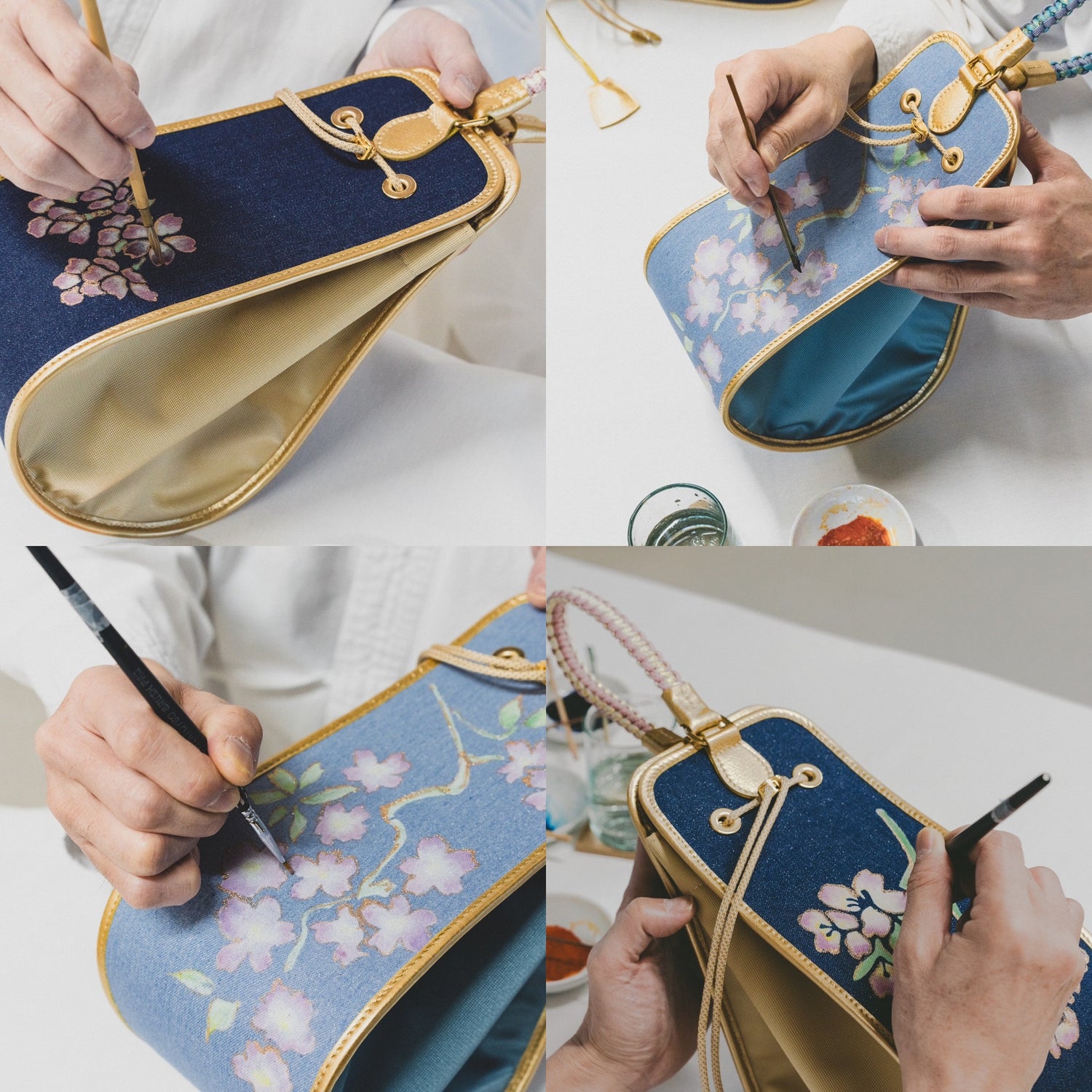
In Japan, we have cultivated wonderful technology, spirit, art, and lifestyle that we can be proud of around the world. In particular, Japanese art has a long historical background in which it has been deeply rooted in daily life as a ``beauty for use'' that can be used in daily life, rather than something that can be seen in a frame. Therefore, isn't it natural that all of today's so-called traditional crafts are originally items used in daily life, such as fashion and interior decoration? Kyoto Denim is working to pass on the Japanese ``beauty of use'' to the next generation, including the romance and process of manufacturing.
KIMONO
Even if lifestyles change in this way, culture continues to grow. Traditional Crafts Kyoto's hand-painted Yuzen dyed clothing is not only used in the form of kimonos, but now it is also used in clothing that can be used for transportation in cars, motorcycles, and bicycles, and it is normal for traditional crafts to be passed down naturally. That's what I think. I think that the fact that things are passed down in this way is one of the great things about traditional crafts and Japanese culture.